
Navigating the aftermath of a vehicle accident involves a complex series of steps that require patience, attention to detail, and a clear understanding of your rights as a vehicle owner. When you are searching for reliable auto repair canoga park ca, understanding how the collision repair process integrates with insurance claims is vital for ensuring your vehicle is restored to its pre-accident condition without unnecessary financial strain. This comprehensive guide aims to demystify the journey from the moment of impact to the final inspection, providing you with the authentic information needed to make informed decisions about your vehicle’s care.
How Does the Insurance Claim Process Work for Auto Repair Canoga Park CA?
The insurance claim process for auto repair canoga park ca typically begins immediately after ensuring all parties are safe and authorities have been notified. The initial phase involves contacting your insurance provider to report the incident, which sets the entire remediation machine in motion. Your insurance agent will assign a claim number to your case, which serves as the reference point for all future communications regarding the damage assessment and repair authorization. It is crucial during this stage to provide a factual and detailed account of the event, as this information forms the foundation of the liability determination and coverage applicability.
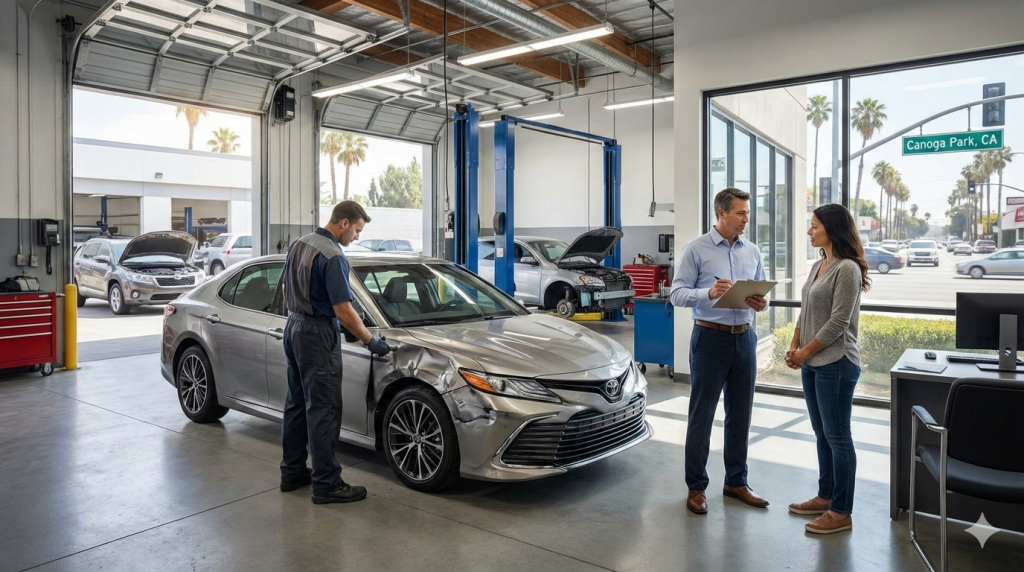
Once the claim is filed, an insurance adjuster is usually assigned to inspect the vehicle and determine the extent of the damage. This professional assessment is a critical juncture where the estimated cost of repairs is calculated based on visible damage and standardized labor rates. However, experienced vehicle owners know that the initial estimate is often just a starting point, as hidden structural damage may only become apparent once the outer panels are removed by a professional technician. Therefore, communicating effectively with both the adjuster and your chosen repair facility ensures that all necessary repairs are documented and covered.
The approval process can sometimes feel like a negotiation, especially when there is a discrepancy between the adjuster’s estimate and the repair shop’s evaluation. In these instances, your chosen repair facility acts as your advocate, submitting supplemental evidence to the insurance company to justify the need for additional parts or labor. This collaborative effort is essential to ensure that no corners are cut and that the vehicle is returned to you meeting all safety and aesthetic standards. The goal is to reach an agreed-upon price that covers a comprehensive repair without leaving you with unexpected out-of-pocket expenses.
Selecting the Right Facility for Auto Repair Canoga Park CA
Choosing the right facility for auto repair canoga park ca is perhaps the most significant decision you will make during the collision repair process. While insurance companies often provide a list of preferred shops, it is your legal right to have your vehicle repaired at the facility of your choice. You should look for a shop that specializes in collision repair Canoga Park residents trust, one that possesses the necessary certifications and equipment to handle modern vehicle complexities. A reputable shop will not only have the technical expertise to fix the damage but will also have experience navigating the bureaucratic hurdles of insurance claims, making the entire experience smoother for you.
When evaluating potential repair shops, consider their reputation for transparency and customer communication. A high-quality establishment will explain the repair plan in detail, outlining which parts will be repaired and which will be replaced. They should be willing to discuss the difference between Original Equipment Manufacturer (OEM) parts and aftermarket alternatives, helping you understand how each choice affects your vehicle’s warranty and resale value. This level of transparency builds trust and ensures that you are comfortable with the work being performed on your valuable asset.
Furthermore, the location and accessibility of the shop play a role in the convenience of your experience. A local shop deeply integrated into the community understands the specific driving conditions and common hazards in the area. They are often more invested in maintaining a stellar local reputation, which translates to a higher level of care and attention to detail for your vehicle. By selecting a dedicated local expert, you ensure that your car is treated with the priority it deserves rather than being just another number in a high-volume national chain.
The Importance of Thorough Damage Assessment
A comprehensive damage assessment is the cornerstone of any successful repair project. When you bring your vehicle in for auto repair canoga park ca, technicians perform a meticulous inspection that goes far beyond the surface scratches and dents. Modern vehicles are designed with complex crumple zones and sensor arrays that can be compromised even in low-speed collisions. Ignoring these underlying issues can lead to long-term safety risks and mechanical failures, which is why a teardown is often necessary to reveal the full scope of the trauma the vehicle has sustained.
During the assessment phase, technicians will measure the vehicle’s frame and chassis to ensure they align with factory specifications. Even a millimeter of deviation can affect the car’s handling and tire wear, potentially causing dangerous instability on the road. Advanced diagnostic tools are used to scan the vehicle’s onboard computers, checking for fault codes that indicate damage to electronic systems such as airbags, parking sensors, and collision avoidance technologies. This holistic approach ensures that every aspect of the vehicle’s performance and safety is evaluated before a single wrench is turned.
Documentation plays a pivotal role during this stage, as every finding must be photographed and recorded for the insurance company. This evidence prevents disputes later in the process and ensures that the insurance payout covers the actual cost of restoring the vehicle. By providing a detailed blueprint of the necessary work, the repair shop establishes a clear path forward, minimizing delays and preventing the frustration of discovering additional problems halfway through the repair process.
Understanding Parts and Materials in Collision Repair
The debate between using OEM parts and aftermarket or recycled parts is a common topic of discussion during the repair process. Insurance policies vary significantly in their coverage of parts, with some strictly limiting repairs to the most cost-effective options available. However, for many vehicle owners, maintaining the integrity of their car means insisting on genuine manufacturer parts that guarantee a perfect fit and finish. Understanding your policy’s stance on insurance auto body repair materials is essential for managing expectations and avoiding surprise costs if you choose to upgrade to OEM components.
The quality of materials extends beyond just the replacement panels; it also includes the paints, primers, and clear coats used to refinish the vehicle. High-quality automotive paint systems are designed to match the factory color precisely and provide durable protection against the elements. A professional shop will use computerized color matching technology to blend the new paint seamlessly with the existing finish, ensuring that the repair is virtually undetectable. This attention to detail is what separates a mediocre repair from a professional restoration that preserves the vehicle’s aesthetic appeal.
Another critical aspect of materials is the adhesives and sealants used to bond structural components. Modern vehicle construction relies heavily on high-strength bonding agents that contribute to the structural rigidity of the car. Using inferior or incorrect materials can compromise the vehicle’s crashworthiness, putting occupants at risk in future accidents. Therefore, ensuring that your repair facility adheres to the manufacturer’s specific repair procedures and uses approved materials is non-negotiable for safety-conscious vehicle owners.
Navigating Delays and Supplements in the Repair Timeline
One of the most frustrating aspects of collision repair is the potential for unforeseen delays. Even with the most diligent planning, the discovery of hidden damage or backordered parts can extend the time your vehicle spends in the shop. A professional service provider handling auto repair canoga park ca will keep you informed at every step, managing your expectations and providing realistic timelines. These delays are often due to the “supplement” process, where the shop must pause work to get insurance approval for additional damage found during disassembly.
The supplement process is a standard part of collision repair, but it requires efficient communication between the shop and the insurer. Every time a new part is needed or additional labor is required, the insurance adjuster must review and approve the change. This bureaucratic back-and-forth can add days or even weeks to the repair schedule if not handled proactively. A shop with a dedicated administrative team can expedite this process, ensuring that approvals are secured quickly so technicians can resume work without unnecessary interruptions.
Vehicle owners should also be aware of global supply chain issues that can affect parts availability. In some cases, a specific sensor or trim piece may be on backorder from the manufacturer, halting the final assembly of the vehicle. While these situations are often beyond the control of the repair shop, proactive communication allows you to make alternative arrangements for transportation. Being mentally prepared for the possibility of timeline shifts helps reduce stress and allows for a more cooperative relationship with the repair team.
Routine Maintenance Checks During Collision Repair
While your vehicle is in the shop for bodywork, it is often an opportune time to address other maintenance needs. Many reputable shops offer additional services that can be performed concurrently with the collision repairs, saving you a separate trip later. For instance, you might request Oil Change services to ensure that your engine maintenance is up to date when you get your car back. Combining these services minimizes the downtime of your vehicle and ensures that it returns to you in peak mechanical condition, ready for the road.
Checking the suspension and alignment is particularly important after an accident, even if the damage appears to be cosmetic. The force of an impact can knock wheels out of alignment or damage suspension bushings, leading to uneven tire wear and poor handling. A comprehensive repair facility will include a wheel alignment as part of the final quality control process, ensuring that the vehicle drives straight and true. Addressing these mechanical issues alongside the cosmetic repairs ensures a holistic restoration of the vehicle’s function and safety.
Fluid levels and battery health are other areas that technicians may inspect while the vehicle is disassembled. A car that sits idle in a shop for several weeks can sometimes develop a weak battery, especially if it was already near the end of its lifespan. By checking these systems proactively, the shop ensures that you don’t encounter a non-start situation shortly after picking up your vehicle. This level of comprehensive care demonstrates a commitment to the customer’s overall satisfaction and vehicle reliability.
Final Inspection and Quality Assurance
The final inspection is the last line of defense before the vehicle is returned to the owner. This rigorous quality control phase involves a detailed walkthrough of all repaired areas, checking for paint imperfections, panel gaps, and proper operation of all replaced components. A technician will typically test drive the vehicle to listen for wind noise, rattles, or mechanical vibrations that could indicate an unresolved issue. This step is crucial for ensuring that the repair meets the shop’s high standards and the customer’s expectations.
During the handover process, the service advisor should walk you through the repairs, explaining exactly what was done and showing you the finished result. This is your opportunity to ask questions and verify that all concerns have been addressed. You should inspect the paint match in different lighting conditions and test the functionality of doors, windows, and trunk lids. A reputable shop will stand behind their work, offering a warranty on the repairs for as long as you own the vehicle, providing peace of mind that the work was done correctly.
If you ever notice an issue after taking the vehicle home, it is important to contact the repair facility immediately to have it rectified. Post-repair support is a hallmark of a quality business, and they should be eager to resolve any lingering issues to maintain their reputation. Whether it is a slight alignment adjustment or a minor trim fitting, addressing these concerns promptly ensures that you remain satisfied with the service and that your vehicle remains in optimal condition.
Conclusion
Navigating the complexities of collision repair and insurance claims does not have to be an overwhelming experience. By understanding the process and choosing a dedicated partner for auto repair canoga park ca, you can ensure that your vehicle is restored safely and efficiently. From the initial damage assessment to the final quality inspection, every step is designed to protect your investment and get you back on the road with confidence. At Brazzers Motors, we are committed to guiding you through this journey with transparency and expertise, providing top-tier collision repair services that you can rely on.
Frequently Asked Questions
How long does the collision repair process typically take?
The duration of collision repair depends heavily on the extent of the damage and the availability of parts. Minor repairs might take a few days, while extensive structural damage could require several weeks. Your repair shop should provide an initial estimate and keep you updated on any changes due to hidden damage or parts delays.
Do I have to use the repair shop my insurance company recommends?
No, you are legally entitled to have your vehicle repaired at the facility of your choice. While insurance companies may recommend specific shops to streamline their own processes, you can choose a shop that you trust to prioritize your vehicle’s quality and safety over speed or cost-cutting.
What is the difference between OEM and aftermarket parts?
OEM (Original Equipment Manufacturer) parts are made by the vehicle’s manufacturer and are identical to the parts originally installed on your car. Aftermarket parts are produced by third-party companies and may vary in fit, finish, and quality. Your insurance policy terms often dictate which type of parts will be covered.
Will the paint match my car’s original color exactly?
Professional collision repair shops use advanced computerized color-matching technology to blend new paint with your vehicle’s existing finish. This process, combined with expert application techniques, ensures that the repaired area blends seamlessly with the rest of the car, making the repair virtually invisible.
Is my deductible paid to the insurance company or the repair shop?
Your deductible is typically paid directly to the repair shop when you pick up your vehicle after repairs are complete. The insurance company pays the shop for the remaining cost of the repairs. It is important to confirm the amount of your deductible with your insurance adjuster before the repairs begin.