
A warning sign is any sudden or persistent vehicle symptom that signals increased safety risk or rising repair cost if ignored, and recognizing these signs quickly preserves safety and saves money. This guide explains the top eight warning signs that require immediate repair, why each matters, and clear next steps for drivers in Canoga Park who need prompt diagnostics or service. You will learn how to interpret dashboard indicators, identify fluid leaks by color and location, diagnose vibration and performance issues, and respond to heat, smoke, or fuel-efficiency declines so you can decide whether to pull over, tow, or drive to a local shop. Safety, cost savings, and local service are the focus of this article: acting early reduces the chance of catastrophic failure and expensive follow-on repairs while keeping you and other road users safe. For drivers near Canoga Park, Brazzers Motors provides local expert diagnostics and repair scheduling to address urgent problems; the business mention below explains how to request an estimate or an appointment without delay. The article is organized into four practical sections covering (1) the top eight signs and quick actions, (2) fluid leaks and low fluid checks, (3) engine performance problems and starting issues, and (4) heat, smoke, and fuel-efficiency emergencies — each section includes identification tips, short troubleshooting lists, and recommended next steps.
What are the top warning signs requiring immediate car repair in Canoga Park?
A critical warning sign is any symptom that shows imminent risk to safety or to major vehicle systems and therefore requires urgent assessment, repair, or towing. Drivers should treat flashing dashboard lights, loud grinding noises, visible fluid pools, severe shaking, sudden power loss, failure to start, smoke or steam, and sharp drops in fuel efficiency as indicators that immediate action is needed. Responding quickly avoids accidents, catastrophic engine or transmission damage, and higher repair bills, and helps preserve warranty coverage and resale value. Below is a concise list of the top eight warning signs with one-line urgency cues so you can spot priority issues at a glance.
- Flashing Check Engine Light (urgent): Stop driving and call for diagnostics.
- Continuous high-temperature gauge or steam: Pull over immediately and shut off engine.
- Grinding or squealing when braking: Avoid driving; brakes may be failing.
- Large fluid puddle under vehicle: Do not drive—identify fluid and arrange inspection.
- Severe vibration or wheel wobble: Reduce speed and stop safely to inspect tires/wheels.
- Sudden loss of power or stalling: Pull over and request engine diagnostics or tow.
- Difficulty starting with clicking/no-crank: Battery or starter issue—limit starting attempts.
- Blue/black/white smoke from exhaust or engine: Stop and seek immediate inspection or tow.
Drivers who spot any of the above should follow these immediate actions to reduce risk and contain damage.
- Call for professional diagnostics or roadside assistance if the vehicle is unsafe to drive.
- Move the car out of traffic when possible, turn on hazard lights, and avoid restarting a severely overheating engine.
- Document symptoms (sounds, light behavior, fluid color) to give accurate information to technicians.
This quick-reference table maps each warning sign to likely causes and the immediate action drivers should take to prioritize repairs and requests for professional diagnostics.
| Warning Sign | Likely Causes | Immediate Driver Action |
| Flashing CEL | Engine misfire, catalytic damage | Pull over safely, limit driving, arrange diagnostics |
| Overheating/Steam | Coolant leak, failed thermostat, radiator issue | Turn off AC, pull over, shut engine, call for tow |
| Grinding Brakes | Worn pads, rotor damage | Do not drive; slow to safe stop and tow to shop |
| Fluid Puddle | Oil, coolant, transmission leak | Do not drive; note color/location and call for inspection |
This table helps prioritize which warnings demand a tow versus a cautious drive to a local shop, and it prepares you to describe symptoms accurately when seeking help. Understanding these quick cues sets up the deeper diagnostic guidance in the next subsections on dashboard lights and unusual noises.
Dashboard warning lights and Check Engine Light: what they mean and when to act
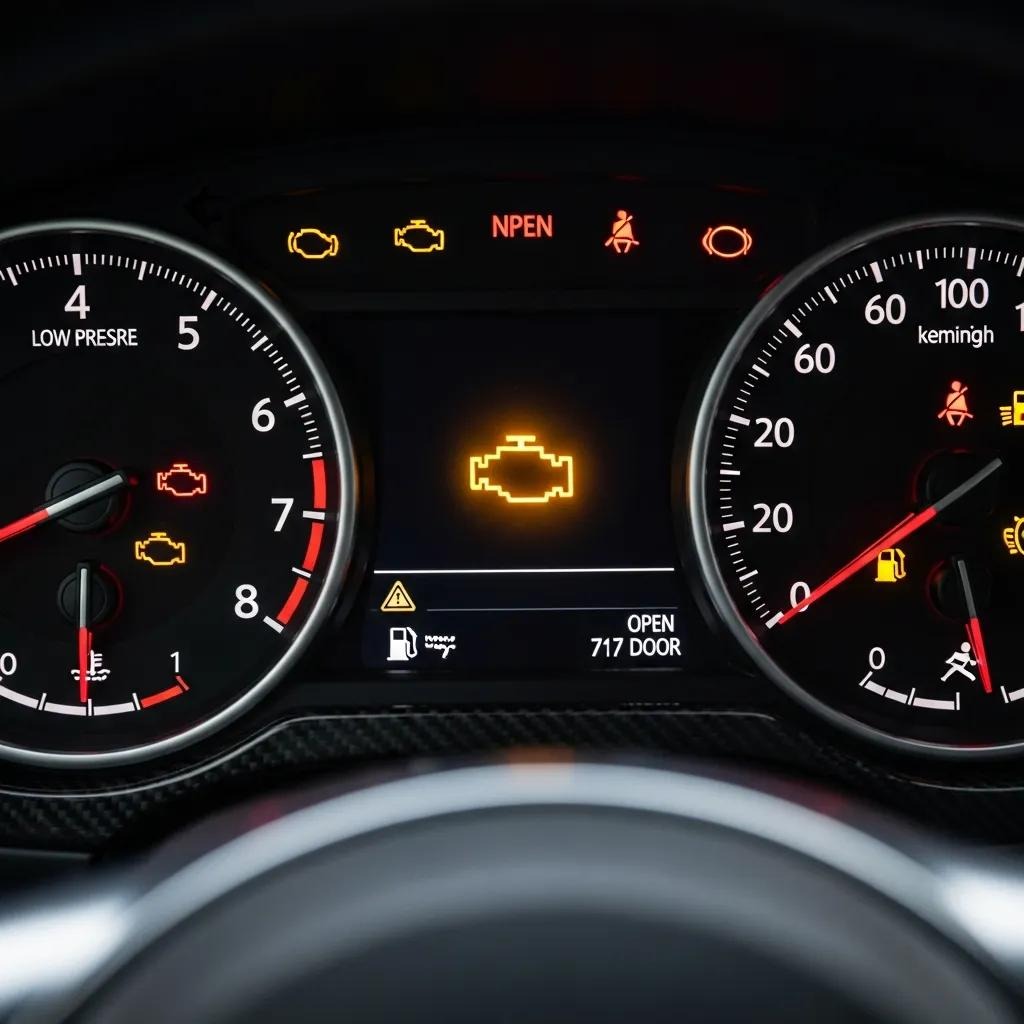
Dashboard lights are on-board diagnostics that indicate specific subsystem alerts, and understanding the difference between steady and flashing indicators helps you choose the correct response. A steady check engine light usually means a non-emergency emissions or sensor issue that still needs timely diagnostics, while a flashing check engine light typically signals a misfire that can damage the catalytic converter and requires immediate stopping and service. Other critical lights include oil pressure (stop immediately), temperature gauge or warning (overheat risk), battery/charging (charging system failure), ABS or brake warnings (brake system compromised), and TPMS (unsafe tire pressure). When a light appears, safely pull over, observe any performance changes, and avoid long high-speed driving until the cause is identified. If an oil-related warning is triggered, consider scheduling an Oil Change Canoga Park to ensure your engine remains in optimal condition.
Research further emphasizes the critical link between misfires and potential damage to the catalytic converter, highlighting the urgency of addressing such warnings.
Catalyst Overheating & Destruction from Misfires
Misfires and fuel shutdown have similar features and affect similarly on overheating the three-way catalyst (TWC). In practice, this similarity is an obstacle to determining whether the misfires or fuel shutdown cause failure of the TWC. Meanwhile, it is of great importance to distinguish fuel shutdown as an original reason from others because its consequences may be tremendous for both the environment and safety.
A Destruction Mechanism of a Three-Way Catalyst Due to a Failure of Fuel Supply in a Spark Ignition Engine, 2021
Understanding which light corresponds to which system narrows down whether the problem is electrical, ignition, fuel delivery, cooling, or brake-related, and this informs whether towing is necessary. For example, a low oil pressure warning suggests engine lubrication failure and requires immediate engine shutoff to prevent seizure, whereas a steady CEL might allow limited driving to a nearby diagnostic shop.Brazzers Motors offers engine diagnostics and sensor testing for Canoga Park drivers and can provide clear upfront estimates for repairs when you report the specific indicator behavior.
Ultimately, the effectiveness of these dashboard warnings relies heavily on a driver’s ability to comprehend and act upon the symbols displayed.
Driver Comprehension of Dashboard Warning Lights
Dashboard indicator light symbols convey information about vehicles status and functioning, but action taken to address issues associated with these symbols depend on drivers’ familiarity and comprehension of the symbols as well as demographic factors.
Comprehensibility and impact of vehicle dashboard indicator light symbols on drivers’ preventive maintenance compliance, C Atombo, 2025
Unusual noises that show your car needs attention
Unusual noises are high-signal symptoms that pinpoint failing components; distinct sounds map to likely systems and help prioritize safe action. Grinding when braking typically indicates metal-on-metal contact from worn brake pads or damaged rotors and is an immediate safety concern requiring prompt brake inspection. Squealing under acceleration can point to slipping belts or worn brake components, while knocking from the engine often signals detonation, low oil pressure, or failing bearings. Whining during gear changes may indicate transmission or differential stress, and clunking over bumps suggests suspension or mount failures. When you hear abnormal noises, reduce speed, avoid high-load driving, and arrange a diagnostic inspection to prevent sudden failure.
To triage, note when the sound occurs (braking, accelerating, idling) and whether it changes with steering or speed; that detail speeds up diagnosis. Common quick checks include:
- Visually inspecting brake pad thickness
- Listening with a window slightly open to isolate source
- Checking for fluid leaks near suspected systems
Local technicians at Brazzers Motors can perform prioritized brake and suspension checks and provide transparent estimates so drivers know whether same-day repair is feasible.
What signs indicate fluid leaks or low fluid levels in Canoga Park?
Fluid leaks and low fluid levels show up as pools, odors, or warning lights, and each fluid type implicates different systems and urgency levels; identifying fluid by color and location helps decide whether it is safe to drive. Oil is typically brown or black and slick, coolant is usually green, yellow, orange, or pink and has a sweet smell, transmission fluid looks red or brown and is slippery, and brake fluid is clear to brown and very slippery with high stopping-risk consequences. Low fluids can cause engine damage, transmission failure, or brake loss, so even small leaks deserve prompt inspection.
Before arranging service, do safe, parked checks:
- Park on level ground and look under the engine bay for fresh drips or stains.
- Check visible fluid reservoirs (coolant, windshield washer) only when cool and on level ground.
- Smell the spot carefully: sweet indicates coolant, hydrocarbon smell indicates oil or fuel.
The table below compares common automotive fluids, visual identifiers, and the risks of driving with low or contaminated levels so you can quickly prioritize which leaks require immediate towing versus prompt repair.
| Fluid Type | How to Identify (color/feel/spot) | Risks if Ignored |
| Engine Oil | Dark brown/black, slick | Engine wear, seizure |
| Coolant/Antifreeze | Green/yellow/orange/pink, sweet smell | Overheating, head gasket failure |
| Transmission Fluid | Red to brown, slippery | Gear slipping, transmission damage |
| Brake Fluid | Clear to amber, oily and very slippery | Brake failure, loss of stopping power |
This comparison helps you match what you see under the car to the likely system affected and to choose whether to tow or drive cautiously to a nearby service center. For fast fluid inspections and repairs in Canoga Park, Brazzers Motors can perform leak detection, hose and seal replacement, and offer clear estimates for coolant, oil, brake, and transmission services.
Fluid leaks under the car: common causes, risks, and quick checks
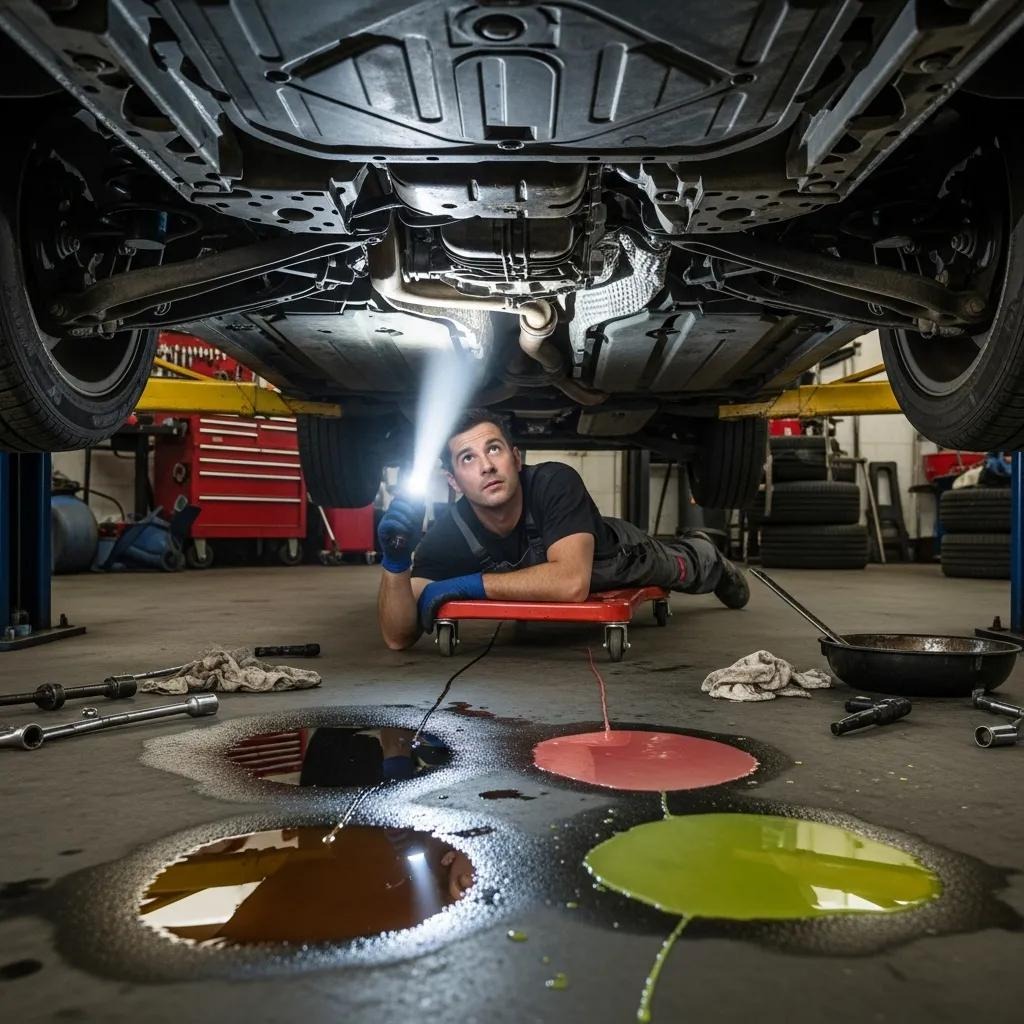
Puddles under the car are often the first visible sign of a failing seal, hose, or component, and identifying the fluid color and smell focuses the repair. Common causes include degraded gaskets or seals, cracked hoses, failed oil pans or drain plugs, and transmission pan leaks; engine oil puddles usually occur under the engine, coolant tends to pool in front of the engine near the radiator, and transmission fluid often appears near the center or rear depending on vehicle layout. Quick checks at a safe stop include:
- Note the location of the drip
- Feel fluid texture with disposable gloves (slippery vs. sweet-smelling)
- Check dipsticks and reservoirs when the engine is cool
If the leak involves brake fluid or a rapidly emptying coolant system, do not drive the vehicle; have it towed to prevent total brake loss or catastrophic overheating. For less urgent but still important leaks, avoid long trips and arrange same-day inspection. Brazzers Motors performs leak tracing and seal replacements for drivers in Canoga Park and can advise whether towing or immediate roadside attention is necessary.
Excessive vibrations or shaking: what they signal and urgent actions
Excessive vibration while driving can indicate tire, wheel, drivetrain, or engine mount problems, and the vibration’s timing (idle, low speed, highway) helps isolate the cause. Vibrations at idle often point to engine misfires, worn mounts, or ignition problems; shuddering during acceleration can signal transmission slippage or engine performance loss; and vibration only at highway speeds commonly indicates wheel imbalance, bent rims, or tire separation. Immediate actions include:
- Check tire pressure
- Scan for visible tire damage
- Ensure lug nuts are tight
- Reduce speed while avoiding sudden steering inputs
Persistent high-speed vibration warrants pulling over and a professional inspection because wheel/tire failure at speed is dangerous. Safe triage steps involve visually inspecting tires, checking wheel nuts with a torque wrench if available, and not driving long distances with unexplained shaking. For alignment, tire service, and drivetrain diagnostics near Canoga Park, Brazzers Motors offers suspension inspections and wheel balancing with transparent upfront estimates so you can get back on the road safely.
What signs point to engine performance problems for Canoga Park drivers?
Engine performance problems manifest as poor acceleration, misfires, stalling, or rough idle, and they commonly stem from fuel delivery, ignition, intake, or sensor failures that a diagnostic scan can identify. Symptoms like gradual power loss often indicate clogged fuel filters or restricted air intake, while sudden loss of power suggests failing fuel pumps or severe mechanical issues. Misfires and rough idling frequently relate to spark plugs, ignition coils, or sensor faults such as a failing MAF or oxygen sensor. Prompt engine diagnostics prevent secondary damage and reduce the chance of becoming stranded.
Begin with simple checks — ensure the air filter is not obstructed, listen for abnormal fuel pump sounds from the rear, and note whether the check engine light is active or flashing. Avoid stressing the engine by towing heavy loads or driving at high speeds until a professional inspects the system. The EAV table below maps symptoms to likely systems and recommended diagnostics so you can describe the problem accurately when requesting service.
| Symptom | Possible System (fuel/electrical/ignition) | Recommended Diagnostic/Service |
| Poor acceleration | Fuel delivery (pump/filter) or clogged intake | Fuel pressure test, filter replacement, engine diagnostics |
| Misfires/rough idle | Ignition coils, spark plugs, fuel trim, sensors | Ignition test, scan codes, sensor replacement |
| Stalling | Fuel supply, idle control, electrical | Fuel pump test, idle control repair, electrical diagnostics |
Poor acceleration or decreased power: likely causes and next steps
Poor acceleration can be gradual or sudden, and distinguishing between those timelines points to different root causes; gradual decline often reflects clogged filters, reduced fuel pressure, or sensor drift, while abrupt power loss can indicate a failing fuel pump, severe ignition failure, or transmission slippage. Diagnostic steps include checking for stored codes with a scan tool, measuring fuel pressure, inspecting the air intake and filter, and testing ignition components. If power loss occurs during heavy load or climbing, suspect fuel delivery issues; if accompanied by transmission noise, include transmission diagnostics.
Avoid high-speed driving and towing before diagnosis, and consider having the vehicle towed rather than driven if acceleration is unreliable. A local engine diagnostic appointment can determine whether a targeted repair (filter, spark plugs) or more extensive work (fuel pump, transmission service) is required, and Brazzers Motors can run prioritized tests and provide an honest upfront estimate for the recommended ENGINE REPAIR services.
Difficulty starting the engine: common culprits and recommended action
Starting problems often boil down to battery/charging issues, starter failure, or fuel/ignition faults, and simple triage narrows the cause quickly; a single click usually means a weak battery or poor connections, repeated clicking suggests rapid drain or bad starter, and no sound at all can indicate ignition switch or starter circuit failure. If there is a strong smell of fuel, avoid repeated cranking to prevent fire risk and request a tow.
Quick checks include:
- Verifying interior dash lights
- Trying a jump start if battery-related
- Listening for fuel pump priming when the key is turned to the ON position
Limit start attempts to avoid battery or starter damage, and arrange for diagnostics if jump-starts fail. For battery, starter, and electrical diagnostics in Canoga Park, Brazzers Motors can test charging systems, perform battery service, and provide options for on-site jump assistance or towing with clear repair estimates.
What urgent signs involving heat, smoke, or fuel efficiency require immediate attention in Canoga Park?
Heat-related warnings, visible smoke or steam, and sudden fuel-efficiency declines are urgent signals that the cooling, fuel, or exhaust systems may be failing and can lead to fire, engine damage, or costly repairs if not inspected promptly. Rapidly rising temperature gauge readings, steam from beneath the hood, or a burning smell require immediate engine shutdown and safe roadside procedures; continued driving risks warped heads or engine seizure. Decreased fuel efficiency can indicate a failing oxygen sensor, poor combustion, underinflated tires, or misaligned wheels, or increased drag, and fixing these problems quickly restores economy and reduces emissions.
When you encounter smoke or steam, pull over, shut off the engine, and keep clear of the vehicle; if flames or strong fuel odor are present, call emergency services. For fuel-efficiency issues, start with simple checks like tire pressure and air filter condition, then schedule diagnostics for sensors and fuel system evaluation. The following emergency steps and quick checks help you decide whether to call for a tow or drive to a shop for inspection:
- If the temperature gauge climbs rapidly or steam appears, stop immediately and shut the engine off.
- For visible smoke (blue/black/white), keep distance and avoid restarting the engine until inspected.
- For sudden drops in MPG, check tire pressure and air filter, then book engine diagnostics if the issue persists.
Smoke or steam from engine or exhaust: immediate danger and actions
Smoke color provides diagnostic clues: white steam often indicates coolant entering the combustion chamber or a coolant leak, blue smoke points to burning oil from valve seals or piston rings, and black smoke suggests excess fuel from a rich condition or failing fuel injectors. Steam from under the hood usually signals coolant loss and overheating; in all such cases, pull over, shut off the engine, and avoid opening the radiator cap while hot. If smoke is accompanied by unusual noises, flames, or a strong fuel odor, evacuate occupants and seek professional help immediately.
Towing is recommended for significant smoke or ongoing steam to avoid igniting oil or fuel onto hot components. Brazzers Motors advises immediate inspection for cooling system leaks, head gasket failure, or oil leaks and can arrange towing and prioritized diagnostics for Canoga Park residents.
Decreased fuel efficiency: what it signals and why you should inspect
A sudden decline in fuel economy often signals underlying mechanical or sensor problems that increase operating costs and emissions; common causes include failing oxygen sensors, clogged air filters, incorrect tire pressure, misaligned wheels, or degraded fuel injectors. Quick owner checks include verifying tire pressures, inspecting the air filter for heavy dirt, and ensuring roof racks or external drag are not added unnecessarily. If these checks don’t resolve the issue, a diagnostic scan for fuel-trim and sensor codes, fuel-pressure testing, and injector inspection will identify the culprit and quantify potential savings from repair.
Repairing a sensor or restoring proper tire pressure often yields measurable MPG improvements that offset repair costs quickly, making timely inspection economically beneficial. For fuel system tune-ups, oxygen sensor replacement, and tire/alignment service in Canoga Park, Brazzers Motors provides diagnostics and clear cost estimates so you can evaluate fuel savings versus repair investment.
For prompt estimates or to schedule an appointment, contactBrazzers Motors in Canoga Park; the shop offers local diagnostics, transparent upfront quotes, and the ability to book same-day or next-day repairs for many urgent issues. Visit or call the Canoga Park location to arrange engine diagnostics, brake inspections, fluid leak tracing, or towing assistance as needed: Brazzers Motors is positioned to respond quickly to safety-critical vehicle problems.
Frequently Asked Questions
What should I do if my car shows multiple warning signs at once?
If your car displays multiple warning signs simultaneously, it’s crucial to prioritize safety. Pull over to a safe location and turn off the engine. Document the symptoms and any dashboard lights that are illuminated. Avoid driving the vehicle, as this could exacerbate the issues. Contact a professional mechanic or roadside assistance for immediate diagnostics. Multiple warning signs may indicate serious underlying problems that require urgent attention to prevent further damage or safety hazards.
How can I prevent warning signs from appearing in the first place?
Preventing warning signs involves regular vehicle maintenance and inspections. Follow your manufacturer’s recommended service schedule, which typically includes oil changes, fluid checks, brake inspections, and tire rotations. Additionally, pay attention to your driving habits; avoid aggressive driving and overloading your vehicle. Keeping an eye on dashboard indicators and addressing minor issues promptly can also help prevent more significant problems from developing. Regularly checking tire pressure and fluid levels can further enhance vehicle reliability.
Are there any warning signs specific to electric or hybrid vehicles?
Yes, electric and hybrid vehicles have unique warning signs. Common indicators include battery warning lights, reduced power during acceleration, and unusual noises from the electric motor or regenerative braking system. Additionally, if the vehicle fails to charge or shows a significant drop in range, these are critical signs that require immediate attention. Always refer to the vehicle’s manual for specific warning lights and their meanings, and consult a qualified technician familiar with electric and hybrid systems for diagnostics and repairs.
What are the risks of ignoring warning signs in my vehicle?
Ignoring warning signs can lead to severe consequences, including safety hazards, increased repair costs, and potential vehicle breakdowns. For instance, neglecting a warning light related to engine performance can result in catastrophic engine failure, while ignoring brake issues can lead to accidents. Additionally, unresolved fluid leaks can cause extensive damage to critical components, leading to costly repairs. Timely attention to warning signs not only preserves vehicle integrity but also ensures the safety of the driver and passengers.
How can I identify the type of fluid leaking from my car?
Identifying the type of fluid leaking from your car involves observing the color, texture, and smell of the fluid. For example, engine oil is typically dark brown or black and feels slick, while coolant is often green, yellow, or orange with a sweet smell. Transmission fluid is red or brown and slippery, and brake fluid is clear to amber and very slippery. If you’re unsure, it’s best to consult a mechanic who can accurately diagnose the leak and recommend necessary repairs.
What should I do if my car overheats while driving?
If your car overheats while driving, immediately pull over to a safe location and turn off the engine. Allow the vehicle to cool down before attempting to open the hood, as hot steam or coolant can cause burns. Check the coolant level and look for any visible leaks. If you suspect a serious issue, such as a blown head gasket, do not attempt to drive the vehicle further. Instead, call for roadside assistance or a tow to a qualified mechanic for inspection and repairs.
Can dashboard warning lights reset themselves after a repair?
Yes, dashboard warning lights can reset themselves after a repair, but this may not always happen automatically. Some lights, like the Check Engine Light, may require a diagnostic tool to clear the codes after the issue has been resolved. If the light remains illuminated after repairs, it’s essential to have the vehicle re-scanned to ensure that all issues have been addressed. Ignoring persistent warning lights can lead to further complications, so it’s best to consult a professional if they do not reset.
Conclusion
Recognizing the warning signs that your car needs immediate repair is crucial for maintaining safety and preventing costly damage. By understanding these indicators, you can take timely action to address issues, ensuring your vehicle remains reliable and efficient. For expert diagnostics and repairs in Canoga Park, consider reaching out to Brazzers Motors for prompt assistance. Don’t wait until it’s too late; schedule your appointment today to keep your vehicle in top condition.