
Finding a dependable repair shop in Canoga Park comes down to one thing: clear signals you can trust. Look for visible certifications, itemized written estimates, a wide service offering, and straightforward collision workflows. This guide walks you through the specific questions to ask, how to read ASE and manufacturer certifications, what a fair estimate should include, and how collision repairs typically flow with insurers. Follow the steps here—verify credentials, compare estimates using a consistent approach, check a shop’s service mix, and track collision repairs from intake to final inspection—so you can make a confident choice next time you need maintenance, diagnostics, or crash repairs in the San Fernando Valley.
How can you identify a trustworthy auto repair shop in Canoga Park?
A trustworthy shop makes its work and processes easy to see: clear credentials, transparent estimates, and a documented service flow that protects your car and your wallet. Trust builds from observable cues—displayed certifications, itemized written estimates, explicit warranties, and visible diagnostic steps—and from consistent behaviors like timely updates and signed approvals. Start with three simple checks: confirm certifications, read recent customer feedback, and insist on a written estimate before any work begins.
Trust signals to look for in Canoga Park shops:
- Visible ASE certifications and training badges that match the shop’s claims.
- An itemized written estimate listing labor, parts (OEM vs aftermarket), taxes, and completion time.
- A clear warranty policy and a documented repair process that includes diagnostics, test drives, and final checks.
- Transparent communication practices—written approvals for extra work and photos documenting damage or repairs.
After those checks, ask for references and recent job photos to confirm workmanship. Consistent answers and clear paperwork are strong signs the shop runs a professional operation. The next section explains which certifications matter and how to verify them in practice.
What certifications should a Canoga Park shop display?—
Shops should show the credentials that match the services they offer: ASE certificates, manufacturer training, and industry affiliations are the main trust markers. ASE verifies a technician’s knowledge across systems like engines, brakes, and electrical work; manufacturer certifications show training on make‑specific systems—important for late‑model cars. To double‑check authenticity, ask to see the certificate or technician ID and have the shop explain which techs hold which credentials and how those credentials apply to your repair. When certifications are visible and explained, you reduce the risk of misdiagnosis because certified techs follow standard diagnostic procedures and documented repair steps.
Also check whether the shop ties certification to quality control—signed test drives, documented diagnostics, and clear sign‑offs—so credentials translate into consistent, verifiable workmanship. Next, use reviews and direct questions to validate local reputation and transparency.
How can you verify local reputation and transparency in Canoga Park?—
Checking reputation means reading recent, specific reviews, asking direct questions, and visiting the shop. Favor reviews that describe the repair, turnaround time, and post‑repair performance over vague praise. Steer clear of shops whose reviews repeatedly mention surprise charges or poor communication. Ask the shop for references, an example written estimate, and a copy of their warranty before you commit.
A practical checklist to evaluate transparency:
- Request a written estimate that lists labor hours, labor rate, parts with origin (OEM vs aftermarket), taxes, and an estimated completion date.
- Ask about warranty coverage and get the terms in writing.
- Clarify approval procedures: how will the shop contact you if technicians find additional issues during the job?
Bottom line: Recent, detailed reviews plus tangible documents—estimates, warranties, approval policies—signal a transparent shop. If a shop resists itemized paperwork or uses vague language, that’s a red flag—keep looking.
Why is ASE certification essential when choosing a Canoga Park mechanic?
ASE certification is a standardized measure of a technician’s competence. Certified techs typically follow consistent diagnostic methods and industry standards, which improves accuracy and reduces repeat repairs. ASE exams cover theory and practical knowledge across systems—engine, brakes, transmission, electronics—so certified technicians usually diagnose problems faster and more reliably. Use ASE as one factor in your evaluation, along with reviews and proof of in‑shop quality controls.
What does ASE certification mean for service quality and warranties?—
ASE certification shows a technician has met objective testing standards and suggests the shop invests in training and quality processes. Certified techs tend to document repairs in ways insurers and warranty providers expect, reducing disputes. When discussing warranties, ask the shop whether certification affects warranty validity and request written warranty terms that name who performed the work. That clarity helps avoid surprises if follow‑up service is needed.
Which specialties do ASE-certified technicians offer?—
ASE‑certified techs often specialize in engine mechanicals, transmissions, brakes, electrical diagnostics, HVAC, and ADAS (advanced driver assistance systems). Match the technician’s specialty to your problem: pick a transmission expert for driveline issues, an electrical/diagnostics specialist for persistent fault codes, or an ADAS‑trained tech for sensor alignment after a collision. For brand‑specific systems—like Subaru CVT or certain European electronics—ask for proof of targeted training and the diagnostic tools the shop uses. The right specialty increases the chance of a first‑time fix.
What should be included in a fair auto repair estimate from Canoga Park shops?
A fair, written estimate breaks the job into clear parts so you can compare quotes and spot hidden fees. It should list labor hours and rate, parts with origin (OEM vs aftermarket), taxes and any fees, an estimated completion date, and warranty coverage. An itemized estimate lets you normalize quotes across shops and ask focused questions about contingencies—giving you more predictable cost and fewer surprises.
The following list shows the critical estimate items to check:
- Labor hours and hourly rate: shows how time is calculated and lets you compare shop efficiency.
- Parts list with OEM vs aftermarket designation and per‑item costs: clarifies component quality and pricing.
- Taxes, disposal fees, and environmental charges: ensures full cost disclosure.
- Estimated completion time and a note on possible delays: sets realistic expectations.
- Warranty terms for parts and labor with duration and coverage limits: protects you after the repair.
After you get estimates, normalize them to a common labor‑rate basis and confirm whether parts are new, remanufactured, or aftermarket so you’re comparing apples to apples. The table below maps estimate elements to customer concerns to help validate quotes before committing.
| Estimate Component | What it Shows | Why it Matters |
| Labor hours & rate | Time allocated and hourly charge | Reveals shop efficiency and lets you compare costs |
| Parts (OEM vs aftermarket) | Origin and part cost per item | Indicates likely quality and long‑term reliability |
| Taxes & fees | Sales tax, disposal, environmental fees | Prevents surprise charges at checkout |
| Estimated completion time | Projected job duration | Helps plan rentals, rides, or work schedules |
| Warranty terms | Duration and coverage for parts/labor | Gives you protection and a basis for disputes |
In short: Ask for an itemized estimate, keep a copy, and use it to compare shops and support insurance or warranty claims.
Which components must be listed in a written estimate?—
A complete estimate breaks out labor (hours × rate), each part with part numbers or clear descriptions, taxes and required fees, expected completion time, and explicit warranty terms for parts and labor. That level of detail creates a documented baseline for work authorization and helps resolve disputes if new problems appear. If a shop gives only a vague total, insist on a revised, itemized estimate—shops that resist itemization may be hiding add‑ons or unclear processes.
How do you compare quotes to avoid hidden costs and surprises?—
Compare quotes by normalizing them: convert to the same labor‑rate basis, match parts assumptions (OEM vs aftermarket), and factor warranty differences into total cost. Ask each shop how they handle discoveries during repair—do they require written authorization, and how fast will they contact you? Those answers reveal whether the shop prioritizes customer approval or proceeds without consent.
Use this quick checklist when comparing estimates:
- Confirm the labor rate and how hours are estimated.
- Match parts assumptions across quotes.
- Ensure warranty terms are written and comparable.
- Ask about approval thresholds for additional repairs.
Bottom line: Normalization and clear approval procedures expose the true cost and reduce the chance that a low sticker price turns into surprise bills.
What range of services should a Canoga Park shop offer for comprehensive care?
A full‑service shop handles regular maintenance and major repairs—oil changes, diagnostics, brakes, suspension, transmissions, engine work, and alignment—so you can rely on one provider for most vehicle needs. That continuity helps the shop keep a full maintenance record, spot related issues, and reduce the number of times your car needs to change hands.
Core services to expect include oil changes with inspections, brake diagnosis and repair, engine diagnostics and repairs, transmission service and rebuilds, suspension and alignment, and electrical troubleshooting. These services keep your vehicle safe and extend its lifespan.
Intro: The table below shows common services, what they typically include, and when you’ll need them.
| Service | Typical Inclusions | When You Need It |
| Oil change | Oil, filter, multi‑point inspection | Regular maintenance or low oil warnings |
| Brake repair | Pads/rotors, fluid flush, inspection | Squealing, noise, or reduced stopping power |
| Transmission repair | Fluid service, diagnostics, rebuild | Slipping, delayed engagement, leaks |
| Engine repair | Diagnostics, part replacement, tune | Check engine light or performance loss |
| Suspension & alignment | Shocks/struts, alignment check | Pulling, uneven tire wear, rough ride |
| Collision repair | Bodywork, frame alignment, paint | After accidents or visible damage |
Summary: A shop that covers this range reduces the need to move your vehicle between specialists and preserves a coordinated service history that improves diagnostics and resale value.
Example: a full‑service Canoga Park center handles transmission work, oil changes, Subaru specialties, suspension, engine and brake repairs—so most routine and complex tasks stay under one roof with full vehicle records.
What core services should be available?—
Core services are scheduled maintenance (oil and filter changes), brake inspections and repairs, diagnostic scanning and engine work, transmission service, and suspension and alignment. A good shop documents diagnostics, uses proper scan tools, and provides before‑and‑after checks including test drives. These process steps show the shop follows a methodical approach instead of quick fixes.
Ask about diagnostic equipment, parts sourcing policies, and how the shop documents inspections to confirm they meet acceptable standards. That process orientation protects you from recurring problems and supports warranty claims.
Should shops offer collision repair and Subaru/European/Asian specialty options?—
Specialty services—collision repair, manufacturer‑specific systems, and CVT expertise for some Subaru models—matter when your vehicle requires brand‑specific procedures or after an accident. These services need specialized tools, OEM procedures, and trained technicians. Verify specialty claims with training certificates, examples of similar jobs, and OEM parts policies; photos of tooling or case studies showing ADAS calibration or CVT service are good proof.
If a shop can’t show tangible competence, consider a certified specialist to avoid compromised safety or performance.
How should collision repair and accident-related needs be handled in Canoga Park?
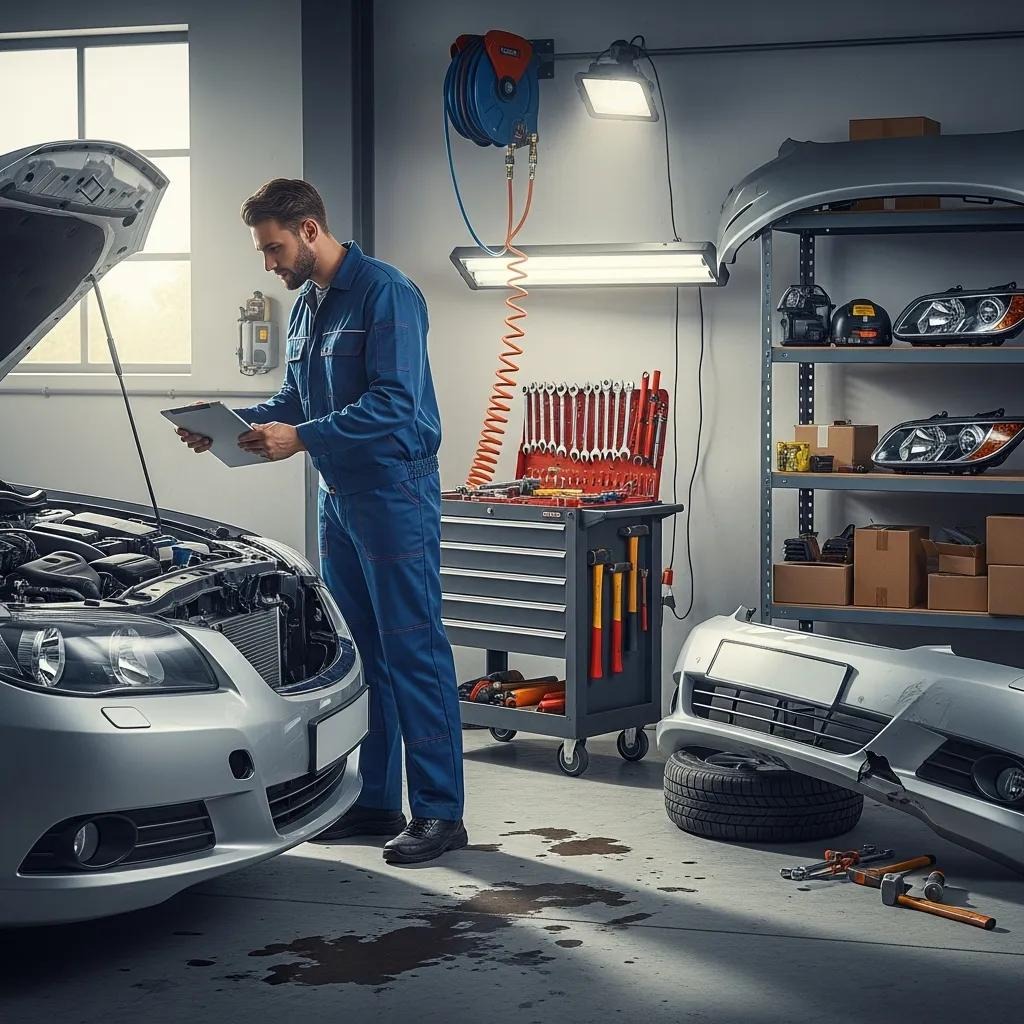
Collision repair works best when it follows a clear, documented workflow: intake and damage photos, a detailed written estimate, insurer coordination, authorized repairs and parts procurement, quality assurance, and final warranty documentation. That transparency reduces disputes with insurers and ensures repairs meet safety standards. For accident victims, clear communication, documented photos, and reliable towing or rental coordination are essential to restore mobility and confidence.
New tools—including AI‑assisted damage detection—are being explored to speed inspections and improve transparency between shops, customers, and insurers.
AI for Transparent Car Damage & Repair Price Estimation
This research proposes an AI architecture (InsureAI) designed to streamline communication between customers and insurance representatives, reduce the need for in‑person inspections, simplify repair decision and price estimation during claims, help customers organize necessary claim information, and improve overall process transparency.
AI for Car Damage Detection and Repair Price Estimation in Insurance: Market Research and Novel Solution, D Iorga, 2023
A condensed step‑by‑step timeline is useful for quick reference:
- Intake and initial photos/documentation
- Detailed written estimate and cost breakdown
- Insurance review and approvals
- Authorized repairs, parts procurement, and body/frame work
- Quality assurance checks, ADAS calibration, and test drives
- Final customer inspection and warranty documentation
Intro: The table below maps collision steps to customer actions and typical timeframes so you can plan and follow progress.
| Collision Process Step | Customer Expectation/Action | Typical Timeframe/Outcome |
| Intake & documentation | Provide police report, photos, keys | 1–3 days initial assessment |
| Estimate & approvals | Receive itemized estimate, insurer review | 2–7 days depending on insurer |
| Parts ordering | OEM vs aftermarket decision | 2–10 days depending on availability |
| Repair & paint | Structural/body repair and finish | 5–20+ days depending on damage |
| QA & ADAS calibration | Test drives, sensor calibration | 1–3 days final verification |
Summary: Knowing these stages helps you coordinate rentals, follow insurer timelines, and avoid unexpected delays by keeping all parties informed and documented.
When selecting a collision shop, expect clear insurance liaison policies, photo documentation of damage, and access to towing and roadside assistance when needed. Many full‑service centers bundle collision repair with emergency roadside services to ease the claim process and ensure smoother handoffs during stressful times.
What is the typical collision repair process from intake to return to road?—
Collision repair usually begins with intake: the shop documents damage with photos and writes an initial estimate after a visual and diagnostic check. The customer and insurer review the estimate, and once approved the shop orders parts—OEM or aftermarket per agreement—and performs structural, mechanical, and cosmetic repairs to manufacturer tolerances. After repairs, the shop runs quality checks—test drives, alignments, and ADAS calibration if needed—then the customer inspects the vehicle and receives warranty paperwork.
Keep copies of documentation at every step and confirm how the shop handles newly discovered issues to avoid unauthorized charges. This stepwise approach limits surprises and helps return the vehicle to safe, documented condition.
How can you manage insurance, rental cars, and warranties during collision repair?—
Manage insurance by documenting everything promptly: file claims quickly, give the shop your insurer’s contact info, and make sure the estimate includes the line items insurers expect. For rentals, check whether your policy covers a replacement vehicle or whether the shop will arrange one; document rental coverage and return terms to avoid billing surprises. For warranties, get written terms for parts and labor and clarify who covers post‑repair defects—the shop, the parts maker, or the insurer—so you know where to escalate issues.
Keep a packet with repair records, photos, and approval emails; this paper trail supports disputes, warranty claims, and resale disclosures. Organized records make insurer communications smoother and protect your rights after repairs.
BrazzersMotors is an example of a local full‑service center in Canoga Park offering transmission repair, oil changes, Subaru specialties, suspension repair, engine and brake service, collision repair, emergency roadside assistance, and towing—illustrating the integrated support to expect from a collision‑capable shop.
BrazzersMotors is located at 20930 Sherman Way, Canoga Park, CA 91303 and can be reached by phone at (818) 357-9475 for scheduling and service questions.
Frequently Asked Questions
What should I do if I have a bad experience with an auto repair shop?
Start by speaking directly with shop management—explain the issue clearly and show your paperwork. If you can’t reach a satisfactory resolution, gather your estimates, invoices, photos, and written communications and contact consumer protection agencies or the Better Business Bureau. Keeping detailed records makes it easier to escalate and resolve disputes.
How can I ensure my vehicle is safe after repairs?
Ask the shop for a post‑repair inspection that includes a test drive and checks of brakes, steering, lights, and other critical systems. Get written documentation of the work and any warranties. For major repairs, consider a trusted third‑party inspection for peace of mind.
What are the signs that my vehicle needs immediate attention?
Seek immediate service for unusual noises (grinding, loud squealing), dashboard warning lights, fluid leaks, sudden handling or braking changes, burning smells, excessive vibration, or if the vehicle pulls to one side. Addressing these signs quickly can prevent further damage and keep you safe on the road.
How can I prepare for my visit to an auto repair shop?
Bring your vehicle’s service history, warranty paperwork, and any previous repair estimates. Make a short list of symptoms and when they happen. Research the shop’s reviews beforehand and arrive ready to describe the issue clearly—this helps the technician diagnose and estimate repairs faster.
What should I do if my vehicle is still under warranty?
Check your warranty terms to see what’s covered. Tell the shop about your warranty status and ask whether they’re authorized to perform warranty work. Keep all repair documents and receipts, as they’ll be important for future warranty claims or disputes.
Are there any specific questions I should ask before authorizing repairs?
Yes. Ask for a detailed written estimate that lists labor, parts, and any fees. Confirm warranty terms for parts and labor, ask how the shop handles unexpected findings during repairs, and request a realistic completion timeline. These questions reveal the shop’s transparency and give you control over the repair process.
Conclusion
Choosing the right auto repair shop in Canoga Park means prioritizing transparency, credentials, and service range. Use the checks in this guide—verify certifications, read recent reviews, get itemized estimates, and confirm warranty and approval procedures—to pick a shop you can trust. If you’d like personalized help, reach out to a local expert to walk you through your options.